Blockhöjd
109,467
climbs every few minutes

In August 2024, NIST published encryption standards meant to replace the ones protecting money and medical records today, on the expectation that quantum computers will eventually break them. Most of the industry published a migration plan. SynergyX built on the new primitives instead: ML-KEM-768 and SPHINCS+-SHAKE-128s, in production, on a chain producing blocks right now. Every figure below is read live from the public API when this page loads. Nothing here is typed in by hand, including the parts that are unflattering.
Below is the chain's own height over the last few days, drawn from the same public endpoint you can call yourself. The line only goes one way. Flat stretches are real and left in: this is a small network, and when few machines are mining, blocks arrive further apart. Four pauses longer than half an hour occurred in the window shown.
No company, no funding and no investors sit behind any of this. Whether that is impressive or reckless is a fair question and not one we will answer for you.
As of today, no publication has covered SynergyX. There is no embargo, no exclusive
promised to anyone, and no agency involved: if you run something, you are first.
Nobody has a quantum computer that breaks encryption yet, so every warning about one
is a prediction you have to take on trust. This is not that. Four commands. No account, no key, no permission from us. About a minute. If any of them fails, nothing else on
this page matters, and you find out before you write it up.
Confirm the chain is producing blocks. Run this twice, a few minutes apart. The number must be larger the second time.
curl -s https://synxcrypto.com/explorer/api/height
Read real blocks, not a summary. Hashes, timestamps, and the transactions inside them.
curl -s https://synxcrypto.com/explorer/api/blocks | head -40
Download a wallet and check the checksum yourself. The published hash must match the file you received.
curl -sO https://synxcrypto.com/download.php
sha256sum <the downloaded file>
Prove the cryptography without reading the source. Key sizes in FIPS 203 and FIPS 205 are fixed by the standard, so they work as a fingerprint. Install the wallet, create an address, and export the seed to a file:
wc -c <the exported seed file>   # 4,800 hex characters
# 4,800 hex = 2,400 bytes = the ML-KEM-768 decapsulation key,
# exactly as specified in FIPS 203. An Ed25519 or secp256k1 seed
# is 32 bytes. There is no classical scheme with this shape.
The same test applies to signatures: SPHINCS+-SHAKE-128s produces a fixed 7,856-byte signature at NIST Level 1. A key of one size and a signature of the other cannot be produced by elliptic-curve cryptography pretending to be post-quantum. You do not have to trust us, and you do not need the repository to check it.
Ask us the hostile question. We will answer it in writing, on the record, including where the answer is unflattering. The list of things we decline to claim is further down this page: we wrote it before you asked.
Every major central bank is now building or piloting a digital currency. The design documents are public, and the feature that keeps appearing in them is programmability: money that knows what it may be spent on, where, by whom and until when. That is not a conspiracy theory, it is a product specification, and it is being written now.
Put that together with a ledger on which every transaction is permanently attributable, and you do not get a payment system. You get an instrument. Spending becomes a permission, and a permission is something that can be revoked by whoever administers it, for reasons they need not disclose, at a speed no appeal can match. The technical work to attach a kill switch to a currency is finished. What remains is the decision to use it.
There is a second, quieter mechanism, and it has been running the whole time. Inflation transfers value from people holding money to whoever issues it, continuously, without a vote and without a receipt. A currency with a hard cap and no premine cannot do that, which is the entire argument for one existing.
So: no company to subpoena. No founder to pressure. No treasury to freeze. No investor whose interests outrank the users'. No allocation held back for insiders. Those are not marketing positions, they are structural facts about how this was built, and every one of them is checkable from the chain itself. It was made by one person because one person is what remains when there is no funding, no permission and nobody to ask.
A protocol is an argument. A wallet is something a person can hold. The SynergyX cross-platform wallet runs on Windows, Linux and macOS, ships with published SHA-256 checksums, and does the post-quantum work without asking the user to understand any of it.

Addresses and transactions use ML-KEM-768 for key encapsulation and SPHINCS+-SHAKE-128s for signatures: FIPS 203 and FIPS 205. Not an optional mode, not a later phase.
ShippingOffers stay listed for 24 hours after users argued that a 12-hour window contradicted the point of a DEX. They were right, so it changed.
ShippingAn on-chain confirmation delivers to the destination address with no human in the loop and no manual send step.
ShippingArgon2id with a 2 GB memory-hard parameter, fixed by consensus. The cost is deliberate: it keeps the work on machines people already own instead of on farms of purpose-built hardware.
ShippingPhysical goods that ship and digital goods that deliver automatically, settled in SYNX. Utility measured in orders, not announcements.
ShippingFull desktop feature set except mining, with QR transfers in person. It is built and held back: a wallet holding post-quantum keys does not ship until it survives red-team review.
Built · not released
Proof of work is usually pure combustion: electricity converted into a number nobody
will ever read again. Hydra makes the same electricity do a second job. Miners run draft
heads for a decentralized inference system, and the network's capacity to think grows
with the number of machines that join it rather than with a datacenter somebody had to
finance.
Stated plainly, because the distinction matters: the drafting system is built and
running, and the throughput it reaches is a function of how many miners are online,
which today is a small number. We do not publish an inference benchmark, because the one
we could publish would be measured on our own hardware, and that is not evidence of a
network. Ask for the current miner count and you will get the real figure.

This is where SynergyX stops resembling a currency project, and the full Hydra protocol write-up sets out the reasoning in detail. Every additional miner adds both hash and inference. The architecture treats compute as the underlying commodity and the chain as the settlement layer for it, which is why the system is built to reward machines that already exist in ordinary homes rather than machines concentrated in the hands of whoever can afford a warehouse.
Our network hashrate reads in single digits. Bitcoin's reads in the hundreds of exahashes. Put side by side that looks fatal, and the comparison is meaningless, because a hash is not a fixed unit of work.
A Bitcoin hash is two passes of SHA-256: nanoseconds, and an ASIC does trillions a second. A SYNX hash is Argon2id with a two gigabyte memory cost. Every single one requires allocating and filling two gigabytes of RAM, which is deliberate: it is what makes the work impossible to shrink onto purpose-built silicon, and it is why an ordinary computer can still compete. Comparing hashes per second across two algorithms that differ by nine or ten orders of magnitude per hash tells you nothing at all. It is revolutions per minute quoted across two different engines.
What the number does honestly tell you: this network is small and new. We are not going to pretend otherwise, and the low figure is not evidence of a large hidden network. It is evidence of a chain with no premine, no marketing budget and no paid mining incentive, which is the shape you would expect. The claim is not that SYNX is big. The claim is that it works, that it started on the right primitives, and that you can check both in under a minute.
Each row below can be verified without contacting us. That is the point of the column on the right.
| Krav | Värde | How to check it |
|---|---|---|
| Nyckelinkapsling | ML-KEM-768 | NIST FIPS 203 |
| Signaturschema | SPHINCS+-SHAKE-128s | NIST FIPS 205 |
| Private key size | 2 400 byte | 4,800 hex on export; the size FIPS 203 fixes for ML-KEM-768 |
| Signaturstorlek | 7 856 byte | The size FIPS 205 fixes for SPHINCS+-SHAKE-128s at Level 1 |
| Proof of work | Argon2id, 2 GB | CPU-only by design, anti-ASIC |
| Samstämmighet | Hybrid PoW + PoS | In-wallet staking; see the whitepaper |
| Block height at page load | 109,467 | /explorer/api/height |
| Transactions on chain | 132 | /explorer/api/stats |
| Circulating supply | 1,313,616 SYNX | No premine, no presale, no VC allocation |
| Desktop wallet | Win / Linux / macOS | Published SHA-256 checksums |
| Gasavgifter | 0 | Send a transaction and read the fee field |
| Team size | 1 | No company, no funding, no employees |
Most press kits make you find the gaps. Here they are, unprompted, because a reporter who discovers them later is entitled to assume we hoped they wouldn't.
SynergyX is a layer-1 blockchain running post-quantum cryptography in production rather than on a roadmap, using ML-KEM-768 for key encapsulation and SPHINCS+-SHAKE-128s for signatures: the algorithms NIST standardized in 2024 as FIPS 203 and FIPS 205. It uses a memory-hard, CPU-only proof of work, charges no gas fees, and ships a cross-platform wallet with published checksums. It also runs Hydra, a decentralized inference layer whose capacity grows with the miner set rather than with datacenter capital. The project has no company, no funding, no presale and no venture allocation. Its founder publishes under the pseudonym Quartz Dust #1.
"I built my first AI system in 2014, and then spent years chasing a question it raised and could not answer: whether free will survives contact with neuroscience, with dreams, with philosophy. SynergyX was designed by someone who came back from that question paranoid. Paranoia is an unfashionable engineering method and an extremely effective one. You assume the adversary is patient, better funded than you, and already recording. Then you build for the day they are right." Quartz Dust #1, SynergyX
One request, and it is for your readers rather than for our traffic: if you write about this, link the live chain endpoint or the explorer somewhere in the piece. Every claim in your article then carries its own proof, and a reader who doubts you can settle it in one click without taking either of us on faith. A story about a chain nobody can check is a story that ages badly. This one does not have to.
There is one more thing worth knowing, because it is unusual and it is checkable in principle rather than in theory: the AI system this project runs uses the chain itself. Hydra's inference work is coordinated and settled through SYNX, which means the currency already has a machine using it rather than only people speculating on it. Whether autonomous systems end up needing money that no institution can freeze is a real open question. We are not claiming to have answered it. We are pointing out that the first users of this one were not human.
There is no communications team, so there is nobody to route your question through and nobody to sanitize the answer. The founder writes as Quartz Dust #1 and does not publish a legal name: a named team is an attack surface, and that position predates this page. Hostile questions are welcome and answered on the record, in writing, including the ones without a flattering answer.
007@synergy-x.net
Usually answered same day.
/explorer/api/stats
Public, unauthenticated, no rate limit games.
synxcrypto.com/download.php
Windows, Linux, macOS.
Coin-Logo.png ·
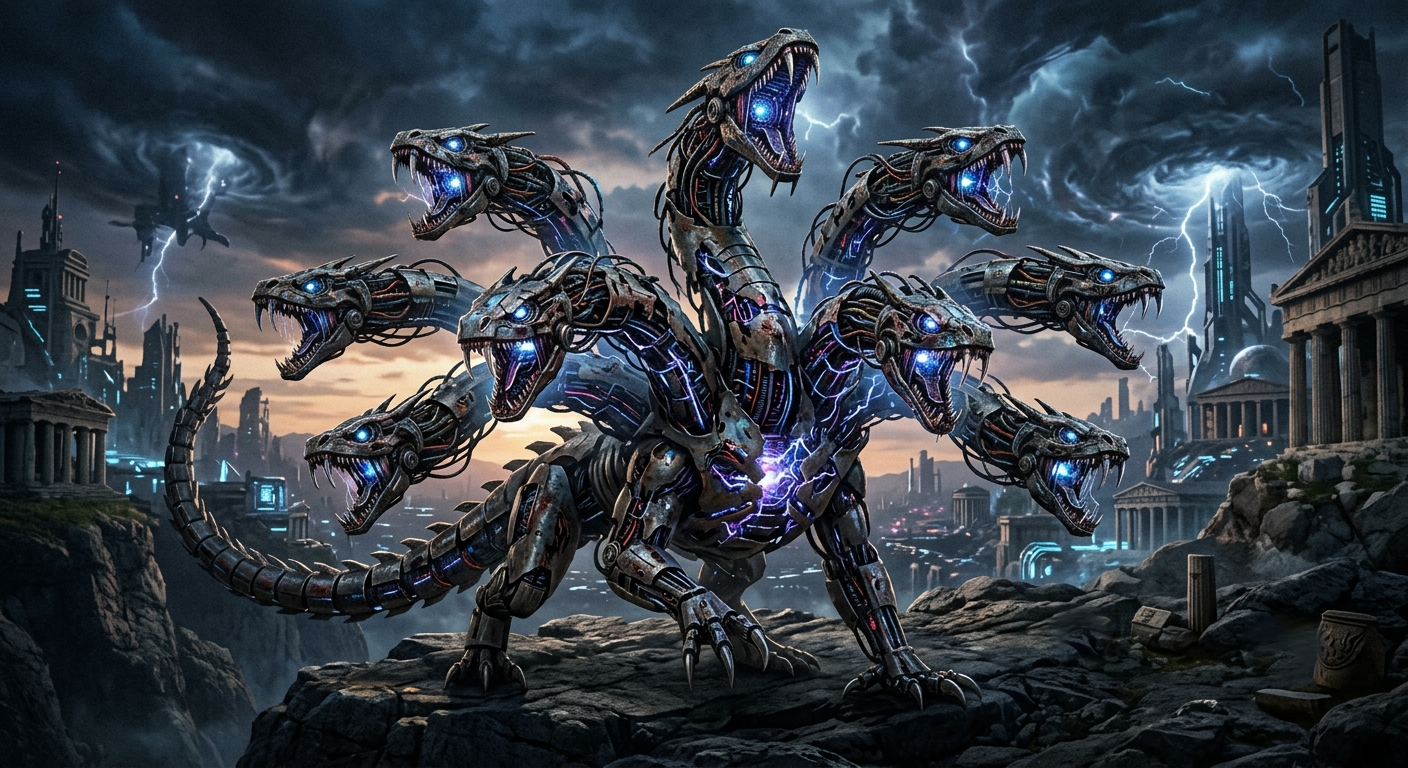
Hydra.png ·
wallet ·
quantum-tiger.png
Free to publish, including commercially, with the credit line
“SynergyX”. No permission needed and no invoice will follow.